
 This recipe is an adaptation of one I first made about 30 years ago (in my vegan days) from The American Vegetarian Cookbook from the Fit for Life Kitchen by Marilyn Diamond. Better hot but also good cold IMO!
There have been many incarnations of this soup in my life, including as a staple at the health food deli where I worked–along with a catering job–to finance an 8-week trip to an ashram in India (that, my friends, is a story for another time.)
Lately I’ve simplified the soup to the bare bones for a quick and delicious low allergen side dish. Sometimes I have this with a side of tempeh, sometimes chicken, and it’s a really great side with salmon.
(more…)


I often have patients and clients asking me about the best options for healthy cookware. This post will review both the good and the bad regarding the detriments and benefits of different types of pots and pans.
Non-Stick
Did you know that people with pet birds are told to avoid cooking with nonstick teflon cookware because the gasses they release can kill them (the birds not the owners…)? Sadly it’s true.
Birds are generally very sensitive to gasses. Canaries were at one time used in coal mines by miners to make sure there were no poisonous gasses in the air. Because of their fast metabolisms, if it wasn’t safe, the birds would die alerting the miners to get out of the mine as soon as possible.
Independent research has shown that pans with nonstick coatings can release up to 15 toxic gases and chemicals, including two known carcinogens (cancer-causing compounds). Teflon (the cookware coating that has been known to kill pet birds) contains an ingredient called perfluorooctanoic acid (PFOA.) PFOA has been shown to increase the risk of developing cancer in animal research studies and is currently classified as a possible carcinogen in humans. A recent study showed that when humans are exposed to this chemical have greater weight gain, and a lower resting metabolic rate.
Because of this, some manufacturers are phasing out PFOA cookware and replacing it with other nonstick compounds. Unfortunately, these compounds are very similar to PFOAs and may well carry the same risks. It’s best to avoid them in general.
Other Potentially Toxic Choices
 Any time you heat a metal pan it leaches some of that metal into the food you are eating. This is potentially dangerous with aluminum cookware as excessive intake of aluminum can lead to toxicity. Some studies are pointing to aluminum toxicity as one of the causative factors in Alzheimer’s Disease.
Copper cookware is often lined with other metals including nickel. Lower quality stainless steel cookware also typically contains high amounts of nickel. For individuals with nickel allergies this can be a big problem. If enough of it is consumed it can cause toxicity.
Healthier Cookware Options
When considering a healthier option for cookware, I look for materials that do
not cause toxicity and may provide some health benefit. In my research, I have found that you usually have to spend a little more for high-quality options, but it’s worth figuring out a way to make it happen. Amazon and even Target now carry some very good brands that are affordable.
Silicone cookware is purported to be inert and safe. As with any sort of material, it has the potential to break down and release toxins if you heat it at high enough temperatures. It’s best practice to use silicone cookware at low temperatures.
Cast iron is a great option for cooking. If you season it well it is essentially a nonstick surface! It heats evenly and well. It is relatively affordable. And bonus, if you are low on iron, are vegetarian, or otherwise want to get some extra iron, cast iron will actually leach iron into your food and up your blood levels!

The amount of iron that gets into your food is dependent on the particular food. For instance, if you put spaghetti sauce in a cast iron skillet the amount of iron in your food can increase nearly ten times (so much so that you might even be able to taste it!) If you put rice in a cast iron skillet the amount of iron in the rice present doubles.
Coated cast iron (enameled) is a better choice If you already have high iron. Iron, when not needed, can cause oxidative damage to your cells. If you use enameled cast iron the metal will stay in the pan and not get in your food.
Other good choices include ceramic, titanium, high-quality stainless steel (nickel-free), and glass. These of cookware are nonreactive and will not leach anything into your foods. Be aware though that often cheaper pots and pans are lower quality and may be manufactured with potentially toxic metals or chemicals. Just do your research. Hat tip: try Craig’s List, Goodwill, or freecycle for one-off pieces of higher quality brands!
If you’ve got any more questions about cookware feel free to be in touch via my contact form, I’m always happy to help.
Yours in Health,


 How do you feel on a regular basis? Do you have all the energy you want? Do you feel great? Just ‘good enough’?
I promise you that you can feel not only better than you feel now, but you can feel great.
It’s so common for us to get pulled along in our daily life, from task to task, or fire to fire, forgetting to stop and make sure we are more than just ok.
We use caffeine to infuse our bodies with enough energy to start the day. Then we focus and plow through our tasks until we have to reach for some chocolate or a soda (or both!) later in the afternoon. We’re too tired to cook when we get home, so we grab something quick and easy that fills our bellies but leaves our bodies depleted of nourishment long-term. After we gorge on this tasty, but unfulfilling meal, we’re too carb-loaded to move off the couch. Does this sound familiar? I hear stories like this, in differing variations, from the majority of my patients and clients, both in the clinic and online.
It’s just SO easy for us to get used to life as mediocre, we think we’ll be happy when…the bills are paid, our house is clean, the kids are calmed down….but then things keep flying at us! We don’t stop to ourselves up emotionally or spiritually, we don’t stop to nourish ourselves. Instead of filling up our water bottles we get a sweet iced tea, a Starbucks drink, or even a sugar-laden smoothie (the “healthy” choice”) on the way to a meeting. We think this quick choice will help us get through the day without thinking about how our bodies just need water, a quick walk, or a few deep breaths.
I’ve written a lot on this topic and one of the statements I made resonated with readers because we don’t often stop to think about the difference between feeling well and just feeling ok:
“Feeling well is deeper. And wider. It’s the you that you can imagine being if you lifted off all of the things that are holding you back in your life.”
Happiness researcher Shawn Achor often says that “common sense is not common action.” People, my clients, and patients included, know so many of the things to do to feel better but they’re too tired, or too overwhelmed to do them.
My Energy Academy is a course that will help you figure out both why you’re so tired and then make a plan to start creating the energy you crave and deserve. Check it out and let me know if you have any questions. I would love to have you experience the great benefits that so many others have already experienced.
Yours in Health,



 My husband is the water keeper. If anyone is wasting a drop in this house there’s hell to pay. As someone who can take (I know, don’t judge) four showers a day to warm my tiny little body up, I can get an earful on the regular. I can hear him unloading and reloading the dishwasher so we can squeeze in every last item. I may run the water when I’m washing dishes instead of washing them all in the same soapy bucket (I know too much about sink germs) and this never goes over well.
And that’s fair, to be concerned about water. Although it’s not an issue here in Oregon, we have no way of getting our water to places that so desperately need it. But still, it’s a resource, and we should respect it.
The average American drinks 3 ½ and 7 gallons of water a week. And most of us could use to drink more than we do. Our bodies need water. It is essential to health and life.
Given how much of it we drink, it’s important to make sure it’s clean and free of too many chemicals. But sometimes that’s a hard balance. Here’s the deal: water is susceptible to growing bacteria and viruses. If you’ve ever been sick while traveling there is a decent chance it was from bacteria in the water. The way this is usually handled in municipal areas is to treat with chemicals. This is good as it kills the viruses and bacteria but unfortunately, there are also downsides to this process—but fear not, there are things you can do about it…read on!
Chlorine and Chloramines
Chlorine and chloramine are used in the majority of municipal water supplies to disinfect. They do an excellent job at this and keep us from being infected with bugs that would give us diarrhea, nausea, and other nasty illnesses. Unfortunately, they are also very good at combining with other compounds to create chemicals called trihalomethanes. Chloroform is an example of a trihalomethane. As you probably remember from gangster movies, chloroform is an effective anesthetic agent – put it on a rag, have someone breathe it in, and they will fall to the ground. It is not concentrated enough to have this direct of an effect, but chloroform is known to be toxic to the liver. There are also a host of other trihalomethanes found in our water supply that can produce deleterious effects.

Other Toxic Compounds in Our Water
Additionally, compounds such as heavy metals, pharmaceutical residues, and even rocket fuel can contaminate your water supply! The combination of all of these potentially toxic agents may lead to weakening of the immune system, disruption of the central nervous system, unhealthy functioning of the renal system, and respiratory system complications.
And then there is fluoride. A hot topic. I live in Portland, Oregon where the water supply is not fluoridated, but in most other municipalities in America, they do add fluoride. This is good for your dental health (again positive/negative) but there is some concern that it may not be healthy for the rest of your body. We have to weigh out the positive and the negative here and I’m not going to get into it as people have very strong opinions about it but suffice it to say it’s worth looking into.
And plastic water bottles? There are chemicals that leach into the water—especially if the bottle gets warm—that can affect your hormonal system. Not good.
Each and every time you drink water, you expose yourself to any chemical it contains.
The liver can only detoxify so many chemicals before it becomes compromised. And when you take a hot shower your pores open, allowing chemicals to be absorbed directly into your skin. My concern here is that illness can result from any sort of long-term exposure to toxic substances.
Because we drink water and shower every day it is crucial that your water is free of contaminants.
So what do you do?

Find a Good Filter
Fortunately, there are filters that will take out most of the contaminants found in our water supply. They come in many different forms. You can filter your whole house. You can get a filter that attaches to your sink faucet or is placed below your sink. We do both! You can get pitchers or stand alone water purifiers. You can even get travel filters!
As with any product, quality matters. Examples of high quality filters include granulated activated charcoal (GAC) and reverse osmosis (RO). You can Google search these terms and will find different manufacturers. A wide variety are sold on Amazon.
Think about what you drink and where it’s coming from. Your body will thank you for it.
Yours in Health,


 How do you know if you can trust that the supplements will have in them what they say they have in them? Short answer…it’s complicated. Supplement quality is more difficult to assess than you might think.
Having a trustworthy source of potent supplements is vital.
Unfortunately, the supplement industry is not well regulated by the FDA or any regulatory organization for that matter. Because of the lack of oversight many supplement manufacturers falsely advertise their products. This practice is all too common in retail stores. In 2015 the New York Attorney General conducted an investigation on store-brand herbal supplements sold at GNC, Target, Walgreens, and Walmart.
This investigation found that four out of five of the supplements they tested did not contain any of the herbs listed on their labels. Four out of five!

Instead, cheap fillers such as powdered rice, house plants, and asparagus were the actual components of the supplements. So, a consumer, for instance, who purchased ginkgo biloba at Walmart or valerian root at Target might be getting zero percent of the herb they had hoped to be taking.
Additionally, a number of supplements at GNC were found to contain unlisted ingredients used as fillers, things like peanuts and soybeans. So, a consumer taking a supplement in hopes to improve their health may actually be taking something they are allergic to.
Furthermore, even if the supplements do contain the ingredients they claim to contain, there is a chance that they are not concentrated at the dosage marked on the label. Dr. Erin LeBlanc, a researcher at the Kaiser Permanente Center for Health Research in North Portland, conducted a study she later published in JAMA. She investigated 55 vitamin D supplements produced by 12 different mass market supplement manufacturers. She found that some of the supplements contained only 9 percent of the vitamin D that they claimed to! And, some contained 146 percent of the advertised dose. Only one contained within 10% the amount listed on the label.
This lines up with my own experience. Back in the day when I was just out of school I did some freelance work consulting for a number of different supplement companies. One of the companies flew me to California with the head of their sales department to present our products to the buyer’s committee at a large health food chain. I was asked a question about our quality control, which I answered honestly. I was fired when we got home because I didn’t lie to the committee. No joke.

What about buying online to save money?
If all that was not unsettling enough, if you buy your supplements on Amazon or eBay or any number of other online retailers, there is a chance that they are actually counterfeit products! If a brand is very popular and sells well it is pretty easy for a third-party to copy the company’s labels, manufacture a worthless pill, put it in a bottle that looks exactly the same as the real thing, and then list it online on a website that looks trustworthy.
These fraudulent companies sell the products at a reduced rate so that customers buy it.
In reality, the supplements arriving at the front door could be just filler. There is also a risk of expiration dates being altered, or the products being stored in a way that compromises the quality of the product (think hot warehouse!) I have friends who work at two different physician owned supplement companies who bought back their OWN product from amazon resellers and found that when they compared lot numbers to product that expiration dates had been scrubbed and changed. Oof.
So…what to do?
Fortunately, there are supplement companies out there that are producing quality products. To learn more about how to find them, check out this article I wrote on exactly how to make sure what you are taking is what you think it is. I carry some high quality supplements in my office for patients and clients (and ship as well,) and discount the more expensive products significantly from retail. But that said, as far as I’m concerned it is unethical for any provider to say ‘you need this supplement’ then tell them they should buy it from you. [Note as an aside, this is the same for ‘alternative’ labs—if a provider wants to run unproven ‘allergy’ testing or stool testing, or even hormone testing, you want to be sure not only that they are legit, but that the provider isn’t making money off of the test other than a small admin fee.]
But back to supplements! In Portland if people prefer to purchase locally I used to recommend a local pharmacy called Pharmaca, but they unfortunately went out of business early pandemic. I sometimes also send folks to another local source—we have several in Portland including NUNM the local naturopathic college.
There are also some brands that have physician label and mass market label. This means that some of the higher quality supplements that I can offer as a physician can also be purchased from your local health food store. But buyer beware. Just because something is sold at the health food store doesn’t mean it’s good quality. And just because the person working at the health food store swears by a product also doesn’t mean it’s good quality. They are trained by the manufacturers and their reps directly. Remember that job I mentioned above that I was fired from? Truly, it can be sketchy out there.
In short? Vet carefully. Buy quality.
Yours in Health,

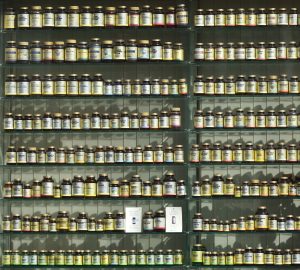
You have probably heard at one point or another that you should take vitamins. But you have probably also heard that it’s unnecessary, and that we shouldn’t.
What’s the truth?
The answer is probably somewhere in the middle.
In an ideal world we would get everything we need from our food as it would come from the earth without refining or processing.
In an ideal world the food we eat would all be grown on land where crops are rotated, and it would never be stored for too long under questionable circumstances.
And in an ideal world we wouldn’t need extra nutrients for our bodies to heal from high stress lifestyles, not enough sleep, chemical exposures, and all of the rest of the ‘hazards’ of modern life.
So when patients and clients ask me about taking a multivitamin I say it depends. It depends on diet, stress load, and personal medical history. And then some.
That said, I do often recommend B vitamins. These are so likely to be depleted from the normal everyday stresses we face that I tend to err on the side of caution and recommend a good quality (my next post is on how to make sure the supplements you buy are exactly that!), full spectrum, activated B vitamin.

The reason I recommend B vitamins is that they play a particularly important role in healthy normal body function as well as in optimal wellbeing.
B vitamins are key in the metabolism of carbohydrates, fats, and proteins, in DNA and RNA synthesis, gene expression, cell signaling, neurotransmitter production (e.g. serotonin, dopamine, adrenaline, GABA), nervous system structure and function, and in red blood cell metabolism. Therefore, a deficiency in any of the B vitamins can have health consequences. Fatigue, insomnia, headaches, pain, diarrhea, dermatitis, anemia, and an increased risk for heart disease are some of the complications associated with B vitamin deficiency.
There are a total of eight B vitamins.
The B vitamins include: B1 (Thiamin), B2 (Riboflavin), B3 (Niacin), B5 (Pantothenic acid), B6 (Pyridoxine), B7 (Biotin), B9 (Folate), and B12 (Cobalamin).
We can’t endogenously synthesize them—meaning our bodies can’t make them from other chemicals so we need to get them all in food or from supplements.
Fortunately, B vitamins are found in high amounts in many types of foods.

Here are some of the places you’ll find different B vitamins.
- B1: Legumes, peas, seeds, spinach, and nuts
- B2: Eggs, mushrooms, meat, almonds, green leafy vegetables, wild rice, Brussels sprouts, and grains
- B3: Meat, fish, peas, peanuts, mushrooms, and eggs contain B3
- B5: Meat, egg yolk, mushrooms, potatoes, avocados, cruciferous vegetables, yogurt, and whole grains.
- B6: Salmon, tuna, meat, sunflower seeds, spinach, potatoes, bananas, and nuts.
- B7: Beef liver, eggs, salmon, sunflower seeds, sweet potatoes, and almonds.
- B9: Green leafy vegetables, mushrooms, cruciferous vegetables, citrus, nuts, seeds, and legumes.
- B12: Liver, clams, salmon, and eggs.
Note that breads and cereals, especially those that contain refined grains are often fortified with a variety of B vitamins.
The trickiest vitamin to get in your diet is B12.
The only foods with a high concentration of B12 are clams, salmon and liver. I’ll personally eat clams and salmon, but hardly every day. And liver? Not so much.
An internet search may tell you that sources such as nutritional yeast and seaweed are suitable options to get enough B12. These sources actually contain B12 analogs that the body cannot use; they can also block the absorption of useful forms of B12. For this reason I always recommend my vegetarian and vegan patients take a good quality B supplement, always.
But it’s not just vegans and vegetarians who might not get enough B12. The digestion and absorption of B12 is somewhat complex and requires a healthy stomach, pancreas, and small intestine. Due to the prevalence of gut dysbiosis and inflammatory disorders, B12 deficiency may also be a concern for everyone..
B-complex supplements can be a good way to support a healthy diet that is already rich in B vitamins.
B vitamin supplementation is generally harmless and has the potential to provide great benefit. High-quality B-complex supplements will contain methylcobalamin and 5-methyltetrahydrofolate (L-5-MTHF) along with the proper doses of the other B vitamins. These would ideally be in their ‘activated’ forms such as P-5-P for B6.
Because of the way B vitamins work in the body it is typically best to take them together rather than individually. The exception is if you have a deficiency in one of the B vitamins and your doctor has advised you to take one in particular.
As B vitamins are water soluble they aren’t typically harmful in doses that are up to 10 or more times their RDA (there are some exceptions, please read up on this.)
One little thing to be aware of: if you take B vitamins and get an uncomfortable tingly feeling in your body accompanied by a sensation of heat, especially your face, neck, and chest, you are likely experiencing a “niacin flush.” This is harmless, albeit uncomfortable. If you do have this symptom, don’t fret, try for a brand that has a slightly lower dose of niacin in it or take it with a nice sized meal.
Oh! If you pee neon yellow while taking a B vitamin supplement, it’s okay, it’s due to the B2! It is normal and harmless for this to happen.
Yours in Health,

Add more energy to your life every day.
Get 7 days of energy-infusing practices delivered to your inbox, FREE!
