
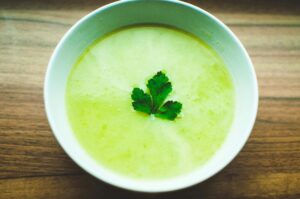
 This recipe is an adaptation of one I first made about 30 years ago (in my vegan days) from The American Vegetarian Cookbook from the Fit for Life Kitchen by Marilyn Diamond. Better hot but also good cold IMO!
There have been many incarnations of this soup in my life, including as a staple at the health food deli where I worked–along with a catering job–to finance an 8-week trip to an ashram in India (that, my friends, is a story for another time.)
Lately I’ve simplified the soup to the bare bones for a quick and delicious low allergen side dish. Sometimes I have this with a side of tempeh, sometimes chicken, and it’s a really great side with salmon.
(more…)
 About 6 months ago I was perusing my online reviews, because you should do that every once in a while, and I came across a review that skewed my stats with a 1 star out of 5. This happens. You can’t be right for everyone, and given my blunt nature, I’m bound to disappoint here and there. But the content of this one threw me. “Do not see Dr Brody if you are a vegetarian or vegan. She actively campaigns against this lifestyle.” It went downhill from there. Fast. :/
My first thought was “Whaaaaaaa?!!!” And my second, once I realized who had written it was “Oh, dang, I blew that one, big time.”
Beyond the amusing mental image of plastering anti-vegetarianism propaganda all over electrical poles in Portland, this review has given me a great deal to ponder. And I’m grateful for it. Am I really against the idea of being a vegetarian? I mean, I was vegan for years. I get it. I’ve lived it. I even opened a vegan restaurant called the Common Sense Café with my husband at the time (no, you can’t look it up, it was 1995 and the venture didn’t even outlast the marriage, which itself you could have missed if you blinked.)
Here’s how I got to where I currently stand on nutrition:
I initially became vegetarian after a meal my freshman year in college. A high school girlfriend was visiting from her own college and we were at a Friendlies restaurant. I ordered a cheeseburger. She scoffed in that way that only a newly minted college freshman scoffs “you mean a fleshburger?” I shifted in my seat uncomfortably. When my meal arrived I couldn’t eat it. I took the burger off of the square, grilled bread and put it under a napkin and didn’t eat meat again for well over a decade.
I personally flew my veggie (and then vegan) flag on the following platform:
1. Animals shouldn’t be tortured.
2. Commercial farming is a bad thing. Period.
3. We, as a culture, eat too much crap and processed meat.
4. Vegetarians are healthier (and thinner) than meat eaters.
5. Vegetarian diets are healthier than diets build around meat.
6. Meat (and dairy) is disgusting.
Over time it became clear that being vegan wasn’t right for my body (although honestly I wish it had been, will get to that later.) I was overweight, tired, and in a constant state of disturbed digestion. Starting to eat meat was one of the hardest things I’ve done, psychologically, in my life. I had to take a long hard look at my values and beliefs.

I remained steady on the first three points:
1. Animals shouldn’t be tortured
2. Commercial farming is a bad thing. Period.
3. We, as a culture, eat too much crap and processed meat.
It’s after that where things changed…I now believe:
4. Vegetarians on the whole are not more likely to be healthier (or thinner) than meat eaters who eat a whole foods diet including heaps of veggies.
5. Vegetarian diets are healthier than diets built around crappy meat but there are many situations (including my own) where a diet including meat is the healthier choice.
6. Meat comes from dead animals. If we care about animals, it is important for those of us who eat meat to acknowledge that and be honest with ourselves about where our food is coming from. To be honest with ourselves about how the animals they are eating were both raised, and slaughtered. To be honest with ourselves about whether they believe in, and are comfortable with, the idea of the food chain. And children should understand where meat comes from and it is no small thing to take a life for our own benefit.
So yes, I personally eat meat now. But only meat that I know has come from animals on small farms, from animals that have not been tortured. I eat grass fed and grass finished beef. I buy my meat in bulk directly from farms where I can, and from stores and restaurants who ethically source their meat—living in Portland, Oregon does make this easier. If I felt well on a vegetarian diet (no dairy of course), or even a pescatarian diet, I would do it in a heartbeat.
But also, I have to admit that yes, I do believe that most people do better with more protein. In particular, people with certain health issues do better with more protein: fatigue, blood-sugar issues, anxiety, mood swings, PMS, and many others.
 In the end, my decades of experience in private practice combined with my ethics as a physician dictates a responsibility to recommend a higher protein diet to those who I believe would be served by this approach.
 In the end, my decades of experience in private practice combined with my ethics as a physician dictates a responsibility to recommend a higher protein diet to those who I believe would be served by this approach.
 I’m honest with my patients, perhaps to a fault. I don’t recall the details, nor would they be appropriate for me to go into in any case, but I am confident that if I pushed this patient it was because I had a strong belief that either eliminating soy and gluten protein, adding animal protein, or both would dramatically change her health for the better.
Does that make me an anti-vegetarian crusader? No, actually. It’s the opposite. I support, 100%, those who choose not to eat meat for ethical reasons. This, in my mind, overrides feeling better if, and only if, that person puts the choice not to eat meat at the top of their own values list. And that is the individual’s choice, period. From that place, I have had hundreds of vegetarian patients over the years. Some have become omnivores or flexitarians, and some have remained vegan or vegetarian. I support them all and will continue to serve them with honesty and integrity- actively campaigning for their choices to line up with their own individual health goals, values and desires.
Yours In Health,

 Please join me on Wed May 22nd
Wed, May 22, 7:00pm – 8:30pm
“Stress and Your Body: Its Impact, Your Solutions”
New Seasons Market, Mountain Park, 3 SW Monroe Parkway, Lake Oswego, OR 97035
Join me to explore the effects of stress on your body, mind, health and life. In this class you’ll learn how to identify things you can change to lower your overall stress load and decrease its impact on your body. Leave with simple tools to start to chip away at your stress and uncover a greater sense of ease in your life.
At the heart of Chinese Medicine is the idea that to stay healthy we should also be in harmony with nature and the natural cycles of the environment.
 Winter is all about storage, rest and restoration. Ever wonder why you feel more tired in the winter? According the the Chinese it’s because you’re supposed to in order to recharge for the bounding energy of the spring. In my fall post I talked about Yin and Yang and the organ systems in Chinese medicine. Winter belongs to the yin, which is exemplified by cold, darkness, dampness and inactivity. In the winter time we should emulate this in how we behave. Early to bed and late to rise is best, as is a minimum of spending energy.
The organ system associated with the winter are the kidneys and bladder. In Chinese medicine, the kidney is the root or source of all the energy (“Qi”) in the body. The kidneys store this vital essence as a reserve so that it can be used in times of stress, illness and to age gracefully. In the winter, it is important that we nourish the kidney Qi. It is also the time when it can be most easily depleted, so it is equally as important that we don’t “overdo it” in the wintertime.
Acupuncture is a great way to support your kidney energy. It’s a time to relax deeply in quiet and silence while your practitioner needles points that nourish and support your kidney qi.
Here are some other things you can do to nourish your qi and stay healthy this winter.
Exercise:
Exercising is always healthy, but from a Chinese medical perspective it’s best to change up the way you approach it in the winter. Long, slow movements are better. Stretching, yoga, Tai Chi and Qi Gong are great options, as it is great to balance a physical workout with a mental and spiritual one. For your cardio workout, consider shorter walks and movements that strengthen the lower body (legs, hips, pelvis and low back) such as squats or lunges.
Food as medicine:
In the winter, it’s best to focus and warming soups and stews. Also add in some walnuts, black sesame seeds and goji berries to oatmeal in the morning, as these are what we consider “food grade” Chinese herbs and are nourishing to the kidneys. Some Chinese medical practitioners recommend herbal formulas. For those who are particularly susceptible to colds, consider the Chinese formula “Jade Windscreen.” It is widely available at health food stores and Asian markets, as well as our office. But check with your Chinese medical practitioner first to make sure it’s the right match for you .
In general:
Pay extra attention to keeping your back and feet warm. The low back is closely tied to the strength of the kidney Qi. Cold enters the body from the feet and wind enters from the neck, so protect these areas carefully. Build extra time into your schedule for rest and focus on sleep like its your new hobby. When at all possible, wake without an alarm. Stay warm by the fire and enjoy it. It’s what nature asks of you!

 It may seem hard to believe that being on a table with needles in you is comfortable and relaxing.
 It may seem hard to believe that being on a table with needles in you is comfortable and relaxing.
 But the fact is that most of the time acupuncture is just that.
Can it hurt? Sure but it really shouldn’t.
First, you need to know that acupuncture needles are very different from medical needles used to give injections or draw blood. Those needles are designed with a hollow core, so they can push substances into the body, or take blood out. Necessarily, the needles are thicker to accommodate that hollow center. Acupuncture needles on the other hand are very thin and very sharp which actually allows them to enter the skin easily and with minimal discomfort. Many acupuncture needles can actually fit through the core of one hypodermic needle.
In fact, I did an experiment and found that 7 acupuncture needles can fit through a medium gauge hypodermic needle. 

Second, there is a difference between sensation and pain.
I would be lying if I said there was no sensation associated with acupuncture. In fact, one of the benefits of acupuncture is that it puts us in touch with our bodies. Being in touch means sensing and experiencing through the body. When acupuncture needles are inserted, there can be a quick sensation of ‘sharpness’, but it doesn’t last for more than a flash, and often patients don’t feel it at all. I hardly ever hear my patients say ‘ouch’.
After the initial sensation during insertion, common feelings are warmth, release, tingling, and a slight but comfortable achiness. These sensations often quiet down, and many times I find that the experience is so comfortable and restful, my patients actually fall fast asleep.
Lastly, responsiveness of the acupuncturist is key to your experience.
It’s really important that you tell your acupuncturist if you feel any discomfort, because this is not the intention. Needles can be adjusted and/or take out to ensure your comfort. If your acupuncturist says it is supposed to hurt, I would consider another acupuncturist..,
In short, I believe that acupuncture should not be painful, period.
Give it a try. We bet you’ll love it.

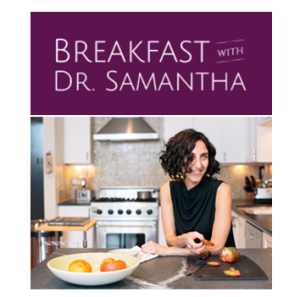 Some people say that breakfast is the most important meal of the day.
There are studies that show metabolism is affected by when we eat as well as what we eat. If we skip breakfast it can make us more likely to have issues with insulin resistance and higher blood sugar which, over time, if you have a disposition, can be a set up for diabetes. It may also make us hungrier later in the day. Typically when people get into this cycle they end up eating more overall, and less healthy food, than people who eat a balanced breakfast. And if we consume a heavier meal at dinner because we skipped breakfast it can prime our bodies for other health concerns. One study also showed disruption of liver metabolism with not eating breakfast. The regular rhythm of your organ function depends on when and what you eat. That said, some people don’t really need to eat breakfast. Everyone’s needs are individual. Get the care you need to know whether you’re someone who really needs to eat breakfast!
These are some of Dr Butler’s recipes (she is no longer working at the clinic) and for a free e.book with over a dozen of Dr. Samantha’s recipes, click HERE:
 Eggs and Greens
• 2 eggs (12 grams of protein)
• 3 cups fresh greens (spinach, collard, kale, etc.)
• Ghee or olive oil
• ¼ cup coconut milk
• 1 tsp curry
• 1-2 tsp gluten-free tamari
• Optional: ½ avocado, handful of sunflower seeds
1. Mix coconut milk, curry, and tamari (or coconut aminos if you don’t eat soy) in a bowl and set aside.
2. Heat skillet over medium heat and place ½ tsp ghee to oil pan, break two eggs and let cook till whites are almost done, flip eggs and move to side of pan
3. Add greens and sauce, cover and let steam for 1-2 minutes (to desired consistency of eggs and greens are wilted).
Tip: add ½ an avocado (2 grams of protein) and a handful of sunflower seeds (1/4 cup has 6 grams of protein) to make a heartier meal.
More than Oatmeal
- ½ cup uncooked rolled oats (6 grams protein)
- ¼ cup almonds (6 grams of protein)
- 1 tsp honey
- ¼ cup berries
- ¼ cup unsweetened milk alternative (almond, hemp, coconut, etc.)
Cook oatmeal according to directions, for faster breakfast, make up a few servings Sunday night and heat in the morning in sauce pan adding a little water so oats are not so thick. Mix ingredients into hot oats and enjoy.
Tip: add a hard boiled egg to your breakfast and gain 6 grams of protein to make a hearty meal.
Protein Smoothie
- 2 scoops Nutribiotic Rice Protein (or other hypoallergenic pure protein powder, hemp, pea, etc.) 20 grams of protein
- 1-2 tblspoons ground flax seeds (1-2 grams protein)
- 1-2 tblspoons nut butter (almond, cashew, pumpkin, etc.) (up to 8 grams protein)
- 1. 5 cups Low carb hypoallergenic milk (almond, coconut, hemp, etc.) (up to 9 grams of protein)
- ½ frozen banana (cut bananas and place in ziplock bags, pull out ½ at a time when making smoothie)
- 1/3-1/2 cup frozen organic berries (blue, black, marion, rasp, etc.)
- Water to desired consistency
In a blender combine ingredients except water, when blended add water little at a time until desired consistency is reached, pour into favorite glass and enjoy (consume within a ½ hour, otherwise flaxseeds will thicken smoothie) Tip: you can remove the nut butter if breakfast seems too heavy
Dr. Samantha’s favorite smoothie recipe can be found HERE. 🙂
Dinner for breakfast
Who says breakfast has to consist of the standard fare of donuts and other high carb options? If you had a great dinner, heat it for breakfast ! If that’s the game plan, make extra dinner with breakfast in mind. Prep over the weekend so that breakfast can be fast and simple.
Ideas: Poached salmon on a bed of greens, baked chicken with broccoli and quinoa, deviled eggs with roasted peppers, asparagus, and eggplants.
Take home: you want to shoot for higher protein content instead of carb loading your morning, this helps to maintain your energy and not get the sugar highs and lows!
Add more energy to your life every day.
Get 7 days of energy-infusing practices delivered to your inbox, FREE!
